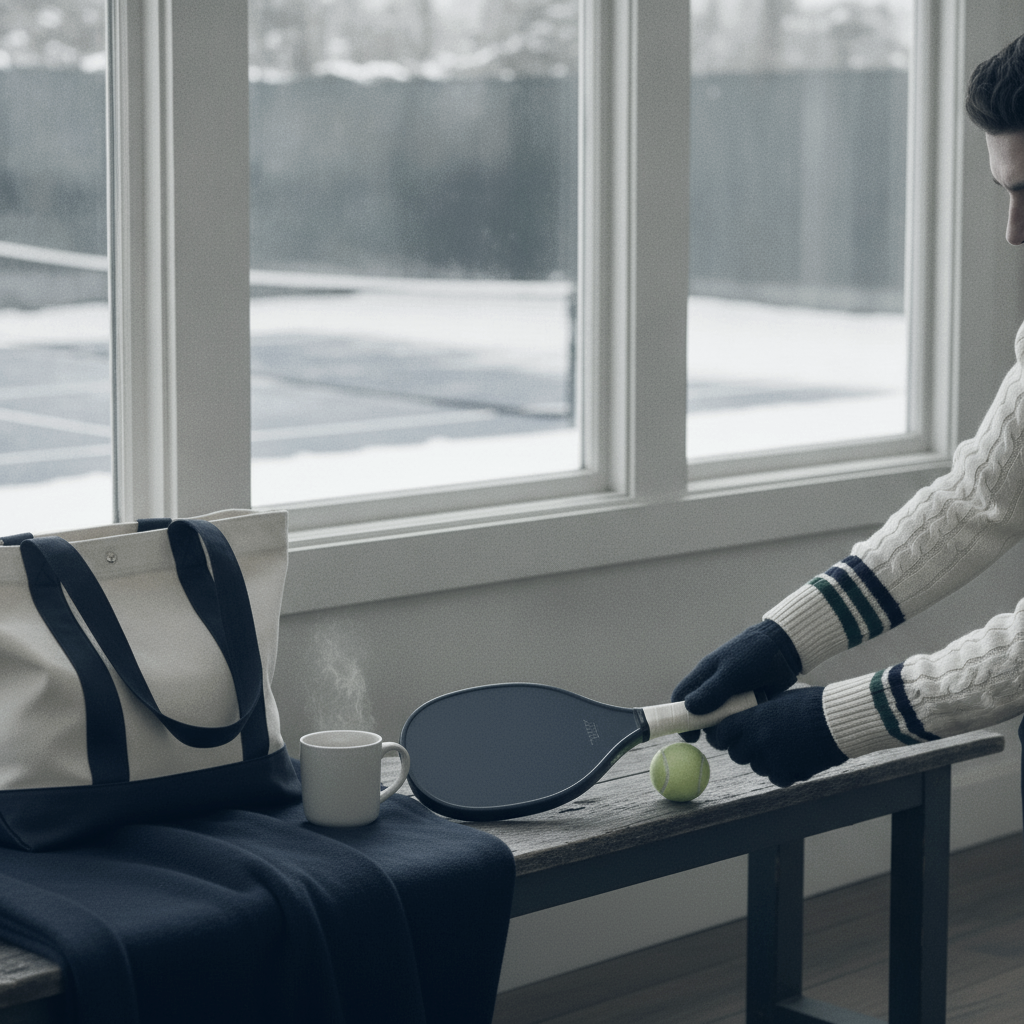
The screens are what make platform tennis its own game. A ball that would be a winner in any other racquet sport comes off the wire and lands back at your feet, playable. Once you stop fearing the screens and start using them, doubles opens up.
The first habit is patience. On defense, let the ball come off the screen before you commit. Amateurs rush the wire and jam themselves; good players give ground, let the rebound slow and drop, and take it late with a controlled reset back to the net. The screen is on your side — it buys you time if you let it.
Positioning as a pair is the second piece. Platform doubles is won at the net, so the whole game is a fight to get both players forward and keep them there. When your partner is pulled back to dig a screen, you cover the middle and hold your position; when you reset, you both recover to the net together. Move as a unit or the gaps will kill you.
On offense, the deck rewards patience over power. Blasting flat winners into a good defensive team just feeds their screens. Instead, work the ball — soft to the feet, deep to the corners, and wait for the short reply that lets you volley into the open court. Points are built, not stolen.
Communication ties it together. Call the screens ("bounce!" versus "wire!"), call who takes the middle, and talk between every point about what the other team gives you. On a cold, fast deck the teams that talk out-play the teams with better strokes almost every time. Play the wire, play together, and let the deck do the rest.